
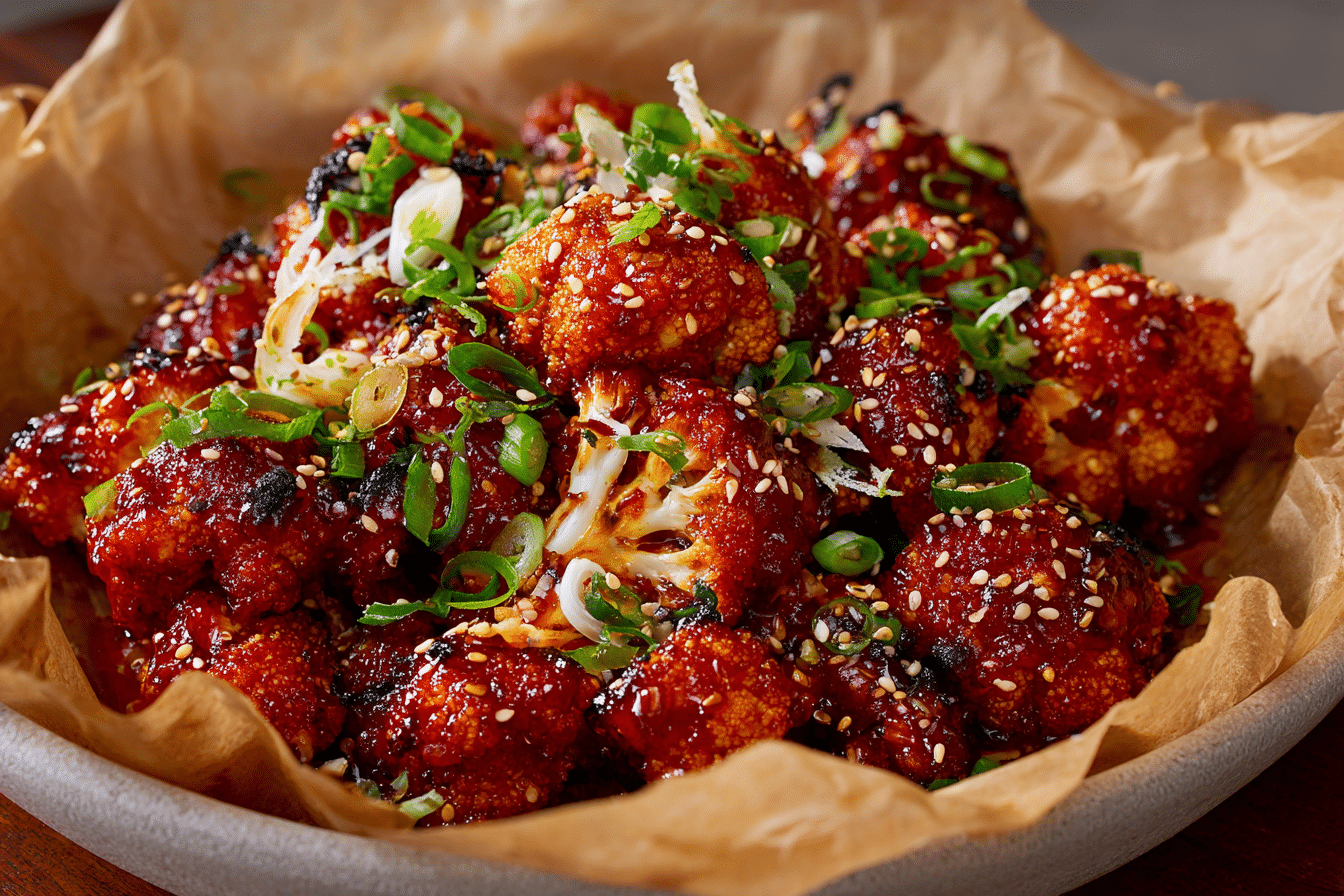
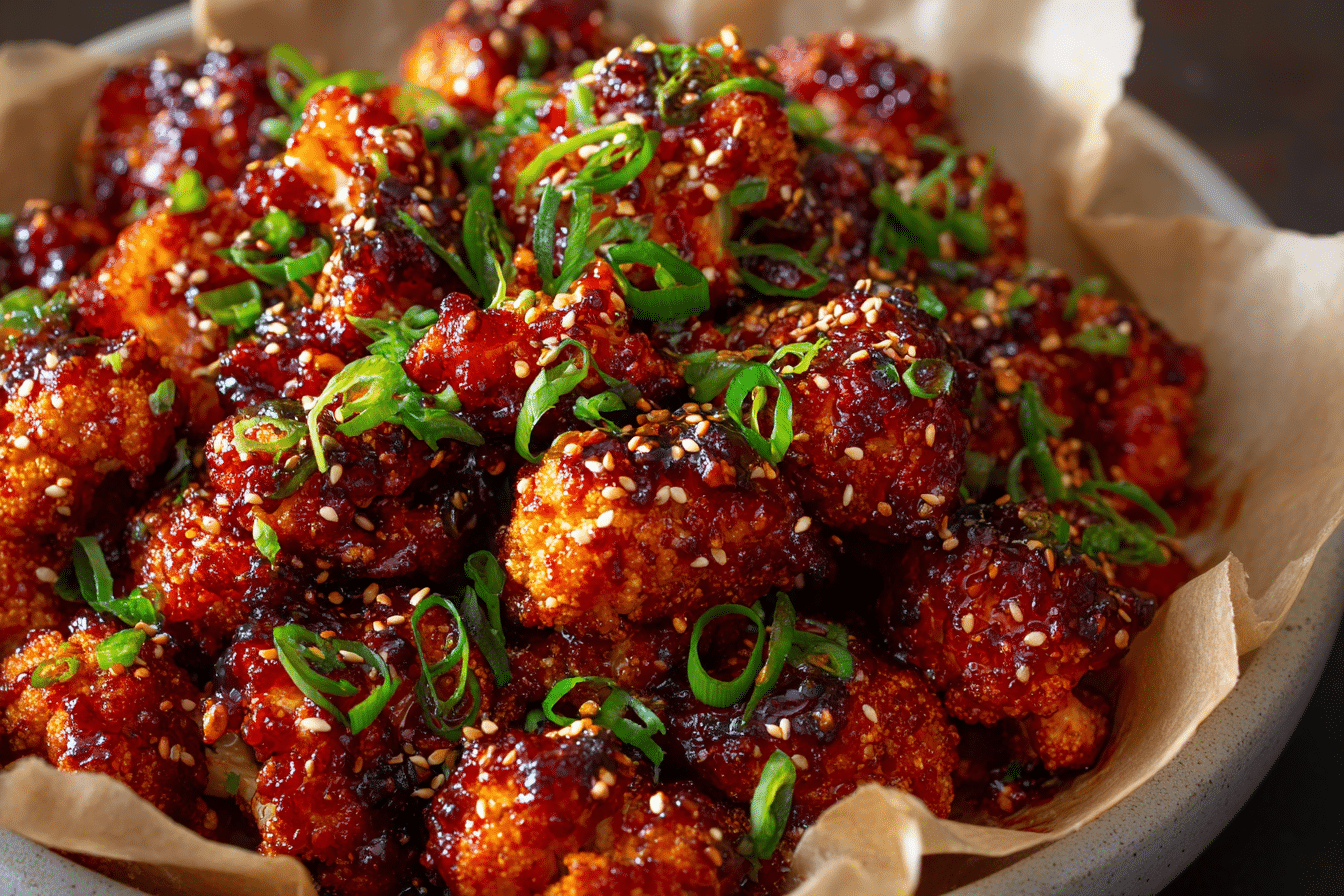
Korean-Style Baked Cauliflower is everything you crave in a takeout favorite — crispy edges, sticky-sweet glaze, and a satisfying kick of heat — but made entirely in the oven, no deep fryer required. This bold, flavor-packed dish takes roasted cauliflower florets and coats them in a glossy, spicy gochujang sauce for a plant-based dish that’s addictively delicious.
Inspired by Korean fried chicken but reimagined for a lighter, vegetarian table, this baked cauliflower delivers serious flavor with wholesome ingredients. The sauce is rich, tangy, and a little fiery, balanced with just enough sweetness to keep you coming back for more.
Perfect as a meatless main, appetizer, or party snack, it’s a dish that works any night of the week — and one you’ll want to make again and again.
Ingredients Overview
This dish comes together with simple ingredients, but the flavor is anything but basic. Here’s what you’ll need:
-
Cauliflower: A whole head or pre-cut florets work fine. Cut into medium-sized pieces for the best roast and texture. Avoid cutting them too small or they’ll get mushy.
-
Flour & Cornstarch: This dry mix forms the coating for the cauliflower. All-purpose flour provides structure, while cornstarch ensures a light, crispy finish.
-
Plant-Based Milk or Water: Used to bind the dry ingredients into a smooth batter. Unsweetened almond, soy, or oat milk are great options.
-
Oil Spray: Helps the cauliflower brown and crisp in the oven without excess fat.
-
Gochujang (Korean Chili Paste): The base of the signature sauce — deeply savory, slightly sweet, and moderately spicy. It gives the dish its distinctive Korean heat and flavor.
-
Soy Sauce: Adds saltiness and umami depth.
-
Rice Vinegar: For a bright, tangy lift that balances the heat and sweetness.
-
Sesame Oil: A little goes a long way — it adds a rich, toasted aroma that’s classic in Korean cooking.
-
Maple Syrup or Brown Sugar: Brings the glaze together with just the right amount of sweetness.
-
Garlic & Ginger: Freshly minced for a flavor kick that punches through the sauce beautifully.
-
Sesame Seeds & Green Onions: Optional toppings that bring texture, color, and an extra layer of flavor.
Step-by-Step Instructions
-
Preheat the Oven
Set your oven to 425°F (220°C). Line a large baking sheet with parchment paper or a silicone mat for easy cleanup. -
Prepare the Cauliflower Coating
In a large bowl, whisk together ½ cup all-purpose flour, ¼ cup cornstarch, ½ teaspoon salt, and ¾ cup water or plant milk to form a smooth, pancake-like batter. -
Coat the Cauliflower
Toss cauliflower florets in the batter until fully coated. Shake off any excess and spread them out in a single layer on the prepared baking sheet. -
Bake Until Golden
Spray lightly with oil. Roast for 25–30 minutes, flipping halfway through, until crispy and lightly browned. -
Make the Gochujang Sauce
While the cauliflower bakes, combine 2 tablespoons gochujang, 1 tablespoon soy sauce, 1 tablespoon sesame oil, 1 tablespoon rice vinegar, 2 tablespoons maple syrup or brown sugar, and 1 minced garlic clove in a small saucepan. Simmer over low heat for 2–3 minutes, just until warm and combined. -
Glaze the Cauliflower
Once baked, transfer the crispy cauliflower to a large bowl. Pour the sauce over and gently toss to coat. -
Return to Oven (Optional)
For extra stickiness, return glazed cauliflower to the baking sheet and bake for another 5–8 minutes. -
Garnish and Serve
Sprinkle with sesame seeds and chopped green onions. Serve hot for best texture.
Tips, Variations & Substitutions
-
Gluten-Free Option: Use gluten-free flour and tamari instead of soy sauce.
-
Air Fryer Method: Air fry at 400°F (200°C) for 15–18 minutes, flipping halfway through. Glaze after cooking.
-
Add Heat: Stir in extra gochujang or a pinch of red pepper flakes for more spice.
-
Milder Version: Mix a little ketchup or tomato paste into the sauce to mellow the heat while keeping the bold flavor.
-
Crunch Boost: Add crushed roasted peanuts or crispy fried shallots as a topping.
-
Protein Add-Ins: Toss in some baked tofu cubes or serve alongside steamed rice for a fuller meal.
-
Sauce Variations: Add a teaspoon of miso paste or peanut butter for added depth and creaminess.
Serving Ideas & Occasions
This Korean-style cauliflower is a showstopper in almost any setting. Here’s how to serve it:
-
As an Appetizer: Set out with toothpicks or small plates for parties or gatherings.
-
Meatless Main: Serve over jasmine or sticky rice with a side of sautéed greens or kimchi.
-
Bowl Building: Add to grain bowls with quinoa, shredded carrots, avocado, and pickled radishes.
-
Taco Filling: Wrap in warm tortillas with cabbage slaw and drizzle with extra sauce for Korean cauliflower tacos.
-
Game Day Snack: A perfect vegetarian alternative to wings — just serve with a dipping sauce or cold beer.
Nutritional & Health Notes
This dish is a wholesome, satisfying way to enjoy bold Korean flavors with a plant-based twist:
-
Cauliflower: A low-carb, high-fiber vegetable loaded with vitamin C, antioxidants, and phytonutrients.
-
Baked, Not Fried: Skipping the deep fryer reduces fat and calories without compromising on crispness.
-
Naturally Vegan: No dairy or meat makes this a great fit for plant-based diets.
-
Customizable Heat and Sweetness: You can control the sugar and spice levels to suit your preferences.
-
Balanced: When served with rice and vegetables, it becomes a well-rounded, satisfying meal with fiber, protein, and healthy fats.
FAQs
Q1: What is gochujang, and where can I find it?
A1: Gochujang is a Korean fermented chili paste made from chili powder, glutinous rice, fermented soybeans, and salt. Look for it in Asian grocery stores or the international aisle of supermarkets.
Q2: Can I make this ahead of time?
A2: You can roast the cauliflower and make the sauce ahead, but for best texture, glaze and serve immediately. Reheating may soften the crisp coating.
Q3: How spicy is this dish?
A3: It has a medium heat level. You can adjust by using more or less gochujang, or adding sweeteners to mellow the heat.
Q4: Is this dish gluten-free?
A4: Not by default, but you can easily make it gluten-free by using tamari instead of soy sauce and a gluten-free flour blend.
Q5: Can I freeze leftovers?
A5: It’s best fresh. Freezing will change the texture of the cauliflower and make it soggy upon reheating.
Q6: What can I use instead of gochujang?
A6: If you can’t find gochujang, mix sriracha with a bit of miso paste, ketchup, or hoisin sauce for a similar sweet-spicy flavor.
Q7: Can I use frozen cauliflower?
A7: Fresh is best for crispiness, but if using frozen, thaw completely and pat dry before coating. Expect a softer texture.
Korean-Style Baked Cauliflower – Sweet, Spicy & Crispy Without the Frying
Crispy oven-baked cauliflower tossed in a spicy-sweet Korean gochujang glaze. A bold, plant-based twist on a comfort-food classic.
Ingredients
-
1 medium head cauliflower, cut into florets
-
½ cup all-purpose flour
-
¼ cup cornstarch
-
½ tsp salt
-
¾ cup water or unsweetened plant milk
-
Oil spray
For the Sauce:
-
2 tbsp gochujang (Korean chili paste)
-
1 tbsp soy sauce
-
1 tbsp rice vinegar
-
1 tbsp sesame oil
-
2 tbsp maple syrup or brown sugar
-
1 garlic clove, minced
Garnish (Optional):
-
1 tsp sesame seeds
-
2 green onions, sliced
Instructions
-
Preheat oven to 425°F. Line a baking sheet with parchment paper.
-
Whisk flour, cornstarch, salt, and water in a large bowl until smooth.
-
Coat cauliflower in the batter and spread on baking sheet.
-
Spray lightly with oil and bake 25–30 minutes, flipping halfway.
-
In a saucepan, combine all sauce ingredients. Simmer for 2–3 minutes.
-
Toss baked cauliflower with sauce in a large bowl.
-
Return to oven for 5–8 more minutes if desired.
-
Garnish and serve hot.
Notes
Serve over rice or in wraps.
Adjust sauce heat and sweetness to taste.
Best eaten fresh for maximum crispiness.